

 英语
 葡萄牙语
 西班牙语
 русский
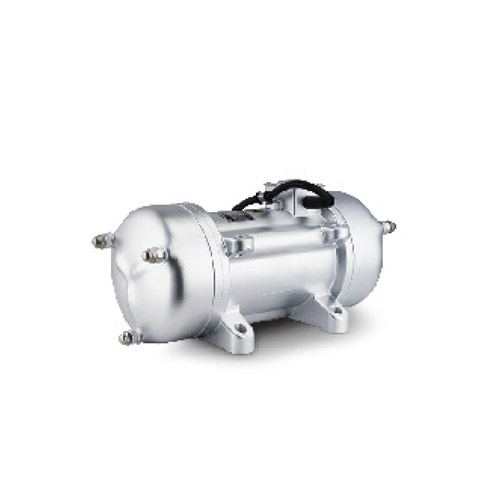
When sourcing a compact vibration motor for industrial equipment, buyers need to match the motor’s electrical configuration with the power available at the installation site. Voltage alone is not enough: phase, supply frequency, current, rotational speed, and required vibration force all affect whether a selected model will suit the intended equipment. For purchasing teams evaluating an Aluminium Micro Vibration Motor, checking these parameters together helps prevent mismatches between the motor specification and the operating system.
Single-Phase and Three-Phase Options Serve Different Power Systems
Small equipment does not always share the same electrical infrastructure as larger industrial machinery. Some installations use single-phase power, while others operate with three-phase supplies. A motor should be selected according to the actual supply conditions rather than its compact dimensions or nominal power alone.
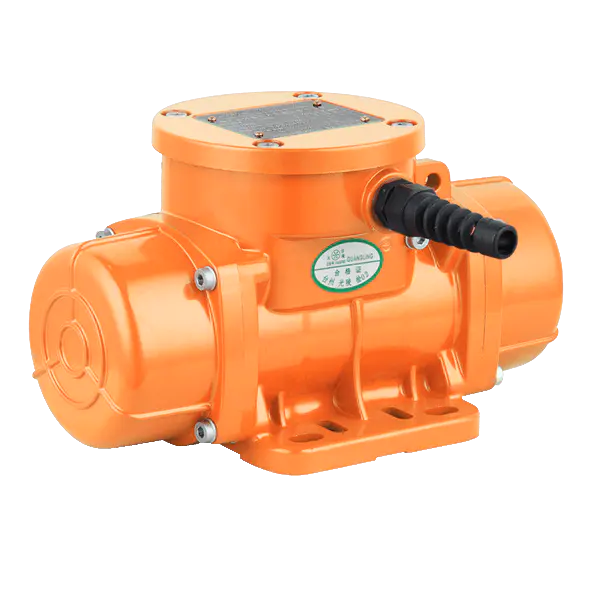
The micro series from Zhejiang Guangling Vibrating Technology lists both single-phase and three-phase configurations. The single-phase model MV40/2M-2 supports 110V or 220V, while the three-phase model MV40/2-2 supports 220V or 380V. Both are listed with a rated input power of 0.04 kW.
For buyers comparing an Aluminium Micro Vibration Motor with other available configurations, these distinctions provide a practical starting point. Confirming the available voltage and phase before requesting a quotation can narrow the model options and reduce unnecessary changes during equipment integration.
Supply Frequency Changes the Operating Speed
Electrical frequency is another purchasing detail that should be considered alongside voltage. The listed micro models operate at 3,000 RPM at 50 Hz and 3,600 RPM at 60 Hz. This difference matters when the vibration source must operate within a defined equipment cycle or coordinate with other mechanical components.
A purchasing specification that states only the voltage may leave an important requirement unclear. Buyers should identify the local supply frequency and confirm the corresponding motor speed with the manufacturer. If equipment will be supplied to multiple markets, separate electrical requirements may need to be documented for each destination.
The manufacturer also indicates that special voltage and frequency can be customized. Buyers considering a customized Aluminium Micro Vibration Motor should provide the intended electrical conditions at the quotation stage so the proposed configuration can be reviewed before an order is placed.
Current and Vibration Force Need to Be Evaluated Together
Input power provides only part of the information required for motor selection. The listed single-phase MV40/2M-2 has current ratings of 0.148 A and 0.351 A for its 220V and 110V options, respectively. The three-phase MV40/2-2 lists 0.121 A at 380V and 0.152 A at 220V. Both models list a vibration force value of 46 in the product table.
These figures should be read as a set rather than as isolated specifications. Equipment manufacturers can use the current rating to assess electrical compatibility, while the force requirement must be checked against the work the vibration source is expected to perform. A motor with a compatible power supply is not automatically suitable if its output does not meet the equipment’s operating needs.
When comparing an Aluminium Micro Vibration Motor with alternatives, buyers should also confirm how the manufacturer defines the stated force value and whether it matches the requirements of the application. This is particularly important when product tables use abbreviated headings or units that require clarification.
Mounting Dimensions Belong in the Purchase Specification
Electrical compatibility does not remove the need to verify the mechanical interface. Guangling’s product page provides mounting dimensions in millimetres, including different dimension sets for size 1 and size 2. Buyers replacing an existing motor or incorporating one into a new assembly should compare the relevant drawing and mounting points with the equipment structure.
The motor’s external dimensions, mounting arrangement, available clearance, and cable connection requirements should be reviewed together. Where a replacement is involved, the existing motor’s nameplate and installation drawing can help identify differences that may not be apparent from the model name alone.
Before finalizing an Aluminium Micro Vibration Motor order, procurement teams should confirm the exact model, mounting dimensions, voltage, phase, frequency, current, speed, and required force. Recording these details in the approved purchasing specification also helps keep repeat orders consistent.
Prepare a Complete Specification for Repeat Orders
A clear motor specification gives purchasing, engineering, and production teams a shared reference. Instead of identifying the required component only by material or general product name, the order documentation should state the model and the operating conditions that the motor must meet.
For a first order, buyers can provide the intended application, available power supply, required vibration output, and mounting information for review. Any non-standard voltage or frequency should be identified separately rather than assumed to be included in a standard configuration.
For repeat purchasing, retaining the confirmed model number and approved technical details reduces ambiguity when different equipment versions or destination markets are involved. This information gives the manufacturer a clearer basis for reviewing future orders and helps buyers maintain consistency across equipment batches.
Selecting an Aluminium Micro Vibration Motor is therefore an electrical and mechanical matching task, not simply a matter of choosing a compact motor. Verifying the supply configuration, speed, force, current, and mounting interface together creates a more reliable basis for procurement and equipment integration.


 Tel: + 86-576-86320988
 Fax: + 86-576-86333217
 E-mail:
 Add: Dayangcheng Industrial Zone, daxi, wenling, zhejiang, china
