

 英语
 葡萄牙语
 西班牙语
 русский
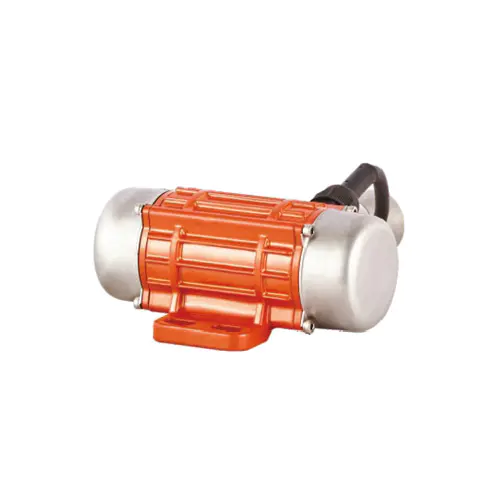
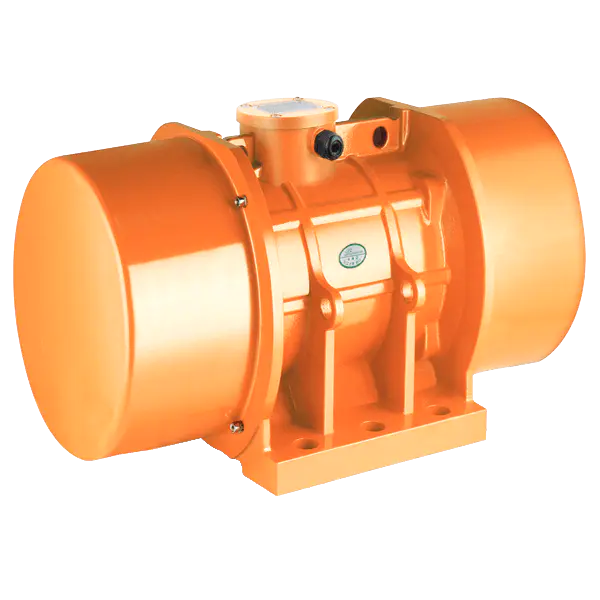
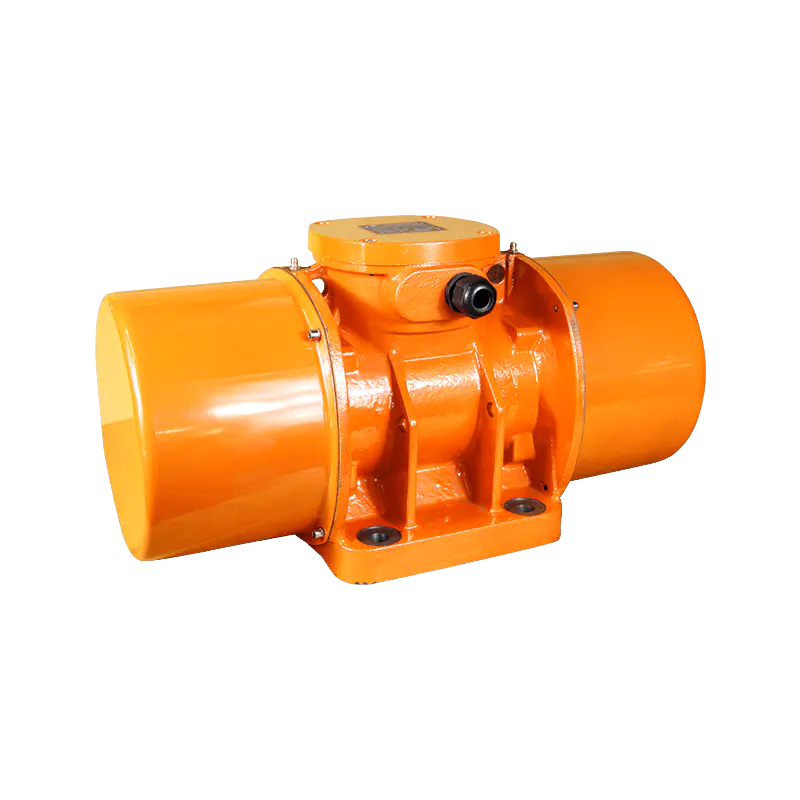
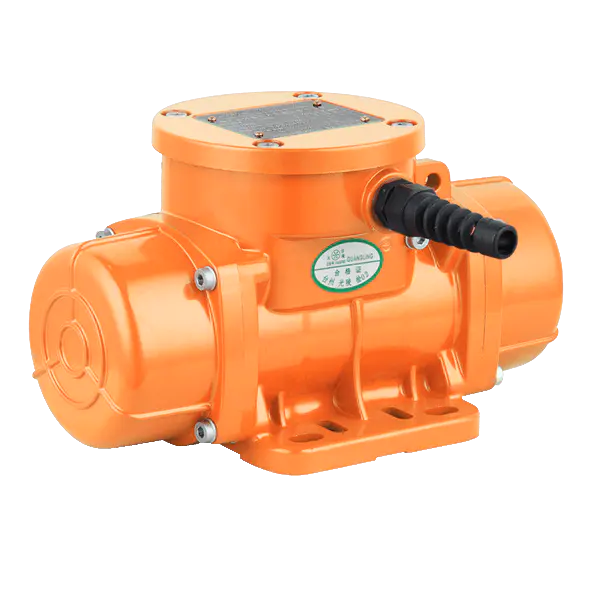
A Vibration Motor works through its speed. The motor spins an eccentric weight, the weight throws force into the machine it is fixed to, and how fast it spins decides how that force moves the material. Zhejiang Guangling Vibrating Technology Co., Ltd. in Wenling, Zhejiang, has 20 years of experience in vibration equipment, and its MV standard series is laid out by pole count, from 2-pole to 8-pole, because pole count and supply frequency together fix the speed.
Speed Follows the Pole Count
An AC motor turns at a speed set by the supply frequency and the number of poles: synchronous speed in rpm is 120 times the frequency divided by the number of poles. On a 50 Hz supply, a 2-pole motor runs near 3000 rpm, a 4-pole motor near 1500, a 6-pole motor near 1000 and an 8-pole motor near 750. The rated speeds in Guangling's range follow the same pattern.
The single-phase 2-pole Vibration Motor runs at 3000 rpm on 220 V and 50 Hz. The three-phase 6-pole motors, such as the MV 200/1, MV 500/1 and MV 1400/1, run at 1000 rpm on 50 Hz and 1200 rpm on 60 Hz. The three-phase 8-pole motor runs at 750 rpm on 50 Hz and 900 rpm on 60 Hz. The three-phase types are available for 220 V and 380 V supplies, so one frame serves both grids.
Force Rises With Speed
The force from an eccentric weight grows with the square of the speed. For the same weight and the same offset, doubling the speed gives four times the force. A 2-pole Vibration Motor at 3000 rpm therefore delivers a sharp, high-frequency shake, while an 8-pole motor at 750 rpm delivers a slower, heavier motion.
Amplitude Moves the Other Way
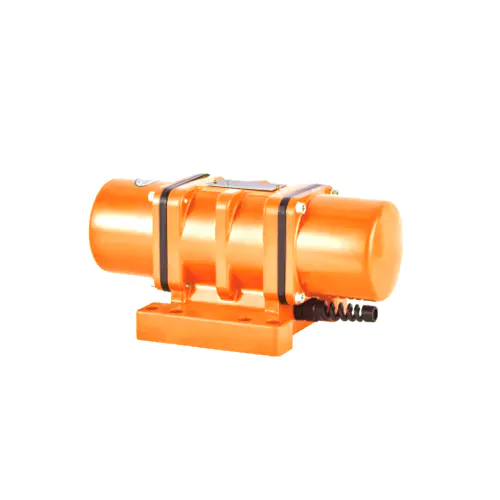
At a given force, a lower frequency moves the machine through a larger distance and a higher frequency through a smaller one. This is why high-speed motors suit fine, light material that responds to rapid shaking, and low-speed motors suit bulk material that needs a large, slow stroke to move.
When Material Behavior Determines Motor Speed
Different materials respond differently to vibration. Fine powders may need rapid movement to spread across a screen or settle evenly, while heavy or sticky bulk material can require a slower, larger stroke to move through a hopper. Material density, particle size and the tendency to form arches or block outlets all influence the operating frequency required by the equipment.
These differences are reflected in the application range of Guangling's MV motors. Bin activators, mining equipment, chemical processing machinery, construction equipment and mixing stations all use vibration for different material-handling tasks. A lower-speed motor may be suitable for moving heavy material through a bin, whereas faster vibration can be useful in screening and handling finer particles. The appropriate Vibration Motor speed depends on the movement required by the particular process rather than pole count alone.
Power Supply Changes the Available Options
Motor selection also depends on the electrical supply available at the installation site. Industrial equipment commonly uses three-phase power, while smaller machines or sites without three-phase connections may require a single-phase option. Frequency is another factor because a motor's rotational speed changes between 50 Hz and 60 Hz.
Guangling's MV range includes three-phase motors rated for 220 V and 380 V supplies, as well as a single-phase 2-pole model operating at 220 V and 50 Hz. Its DC series operates at 12 V and 24 V with a rated speed of 3000 rpm, providing options for mobile and battery-powered equipment. A Vibration Motor must therefore be matched to the site's voltage, phase and frequency before its operating speed and force are considered.
From Motor Ratings to Equipment Operation
Pole count provides a useful starting point when comparing vibration motors, but the rated speed is only one part of the selection process. The eccentric weight setting affects the excitation force, while the structure and load of the connected machine influence how vibration is transferred to the material. Two machines using motors with the same rated speed may therefore require different force settings.
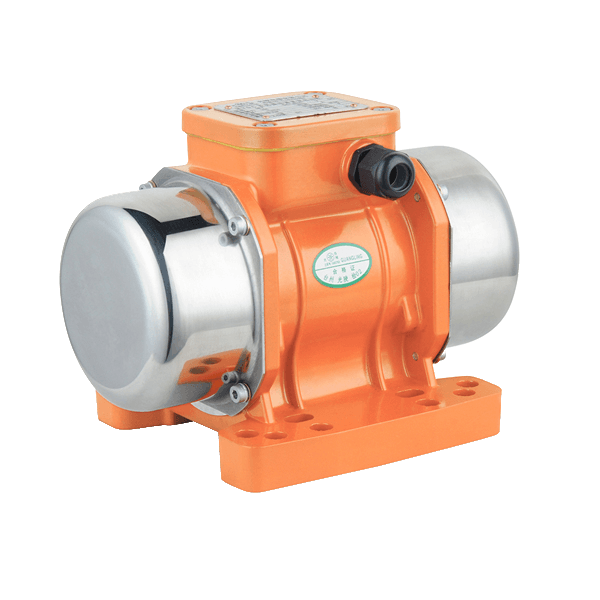
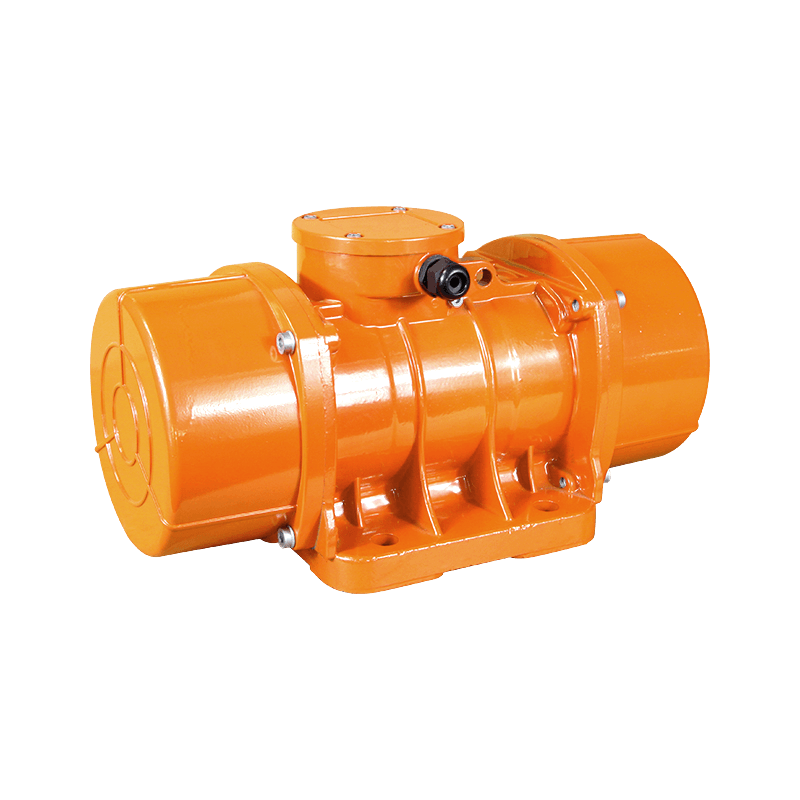
Guangling's product range includes 2-pole, 4-pole, 6-pole and 8-pole MV standard motors, together with single-phase, DC and micro series. These options cover different electrical supplies and operating requirements across material handling and industrial processing. When specifying a Vibration Motor, the relationship between motor speed, excitation force and machine load provides a more useful basis for selection than comparing rpm figures alone.


 Tel: + 86-576-86320988
 Fax: + 86-576-86333217
 E-mail:
 Add: Dayangcheng Industrial Zone, daxi, wenling, zhejiang, china
