

 英语
英语 葡萄牙语
葡萄牙语 西班牙语
西班牙语 русский
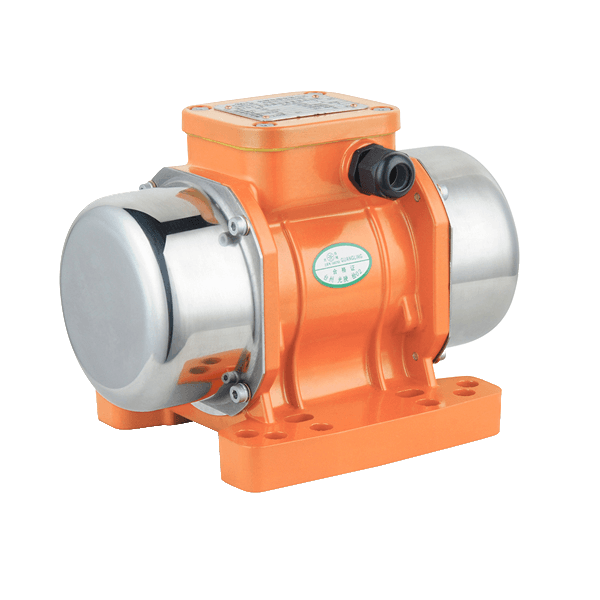
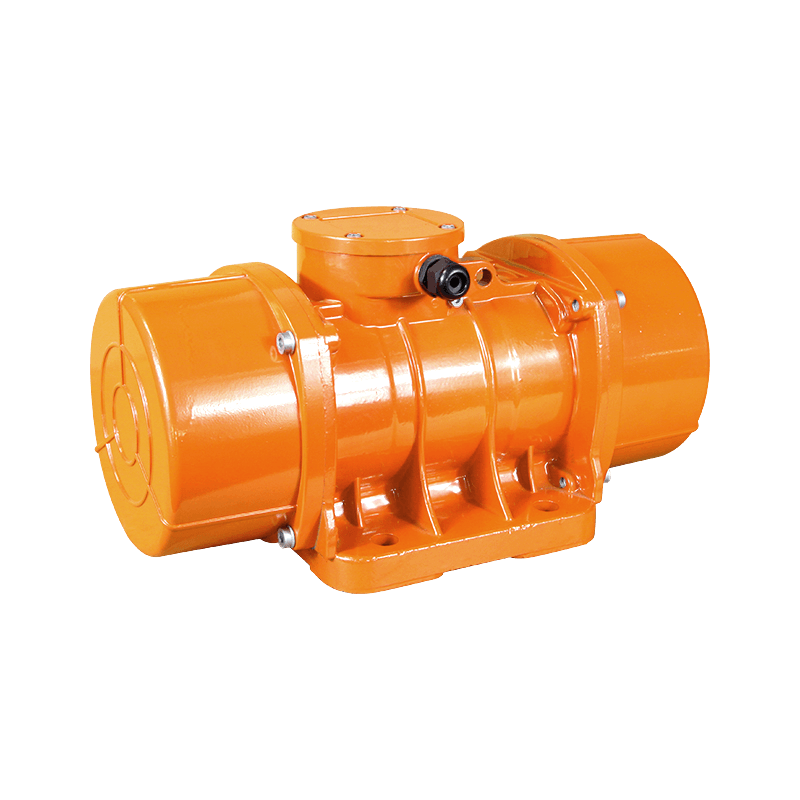
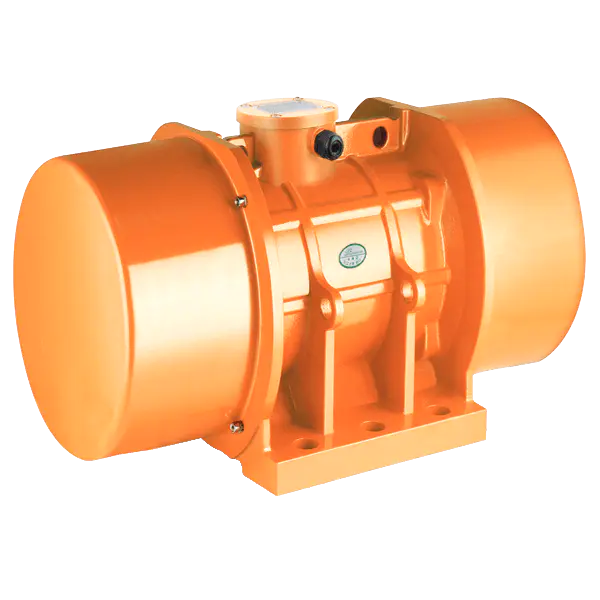
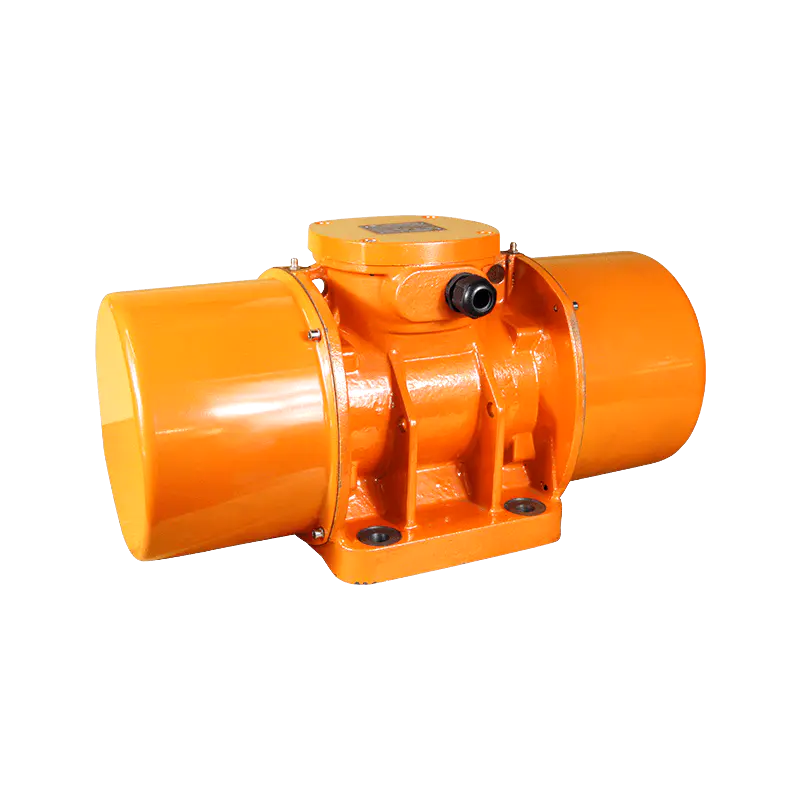
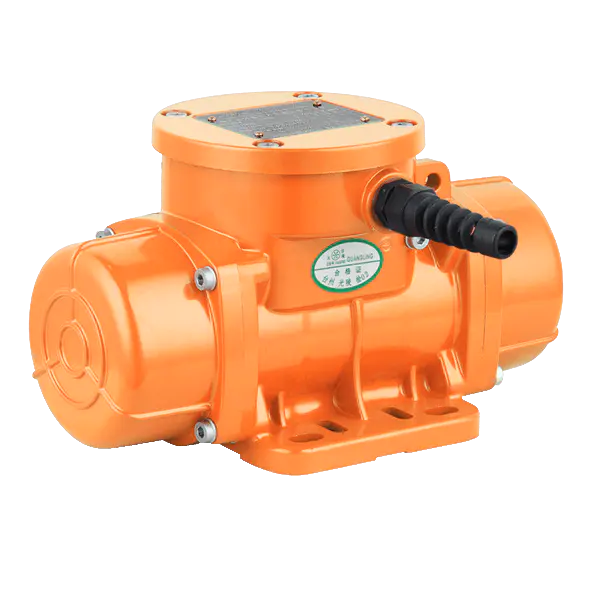
A feeder vibrator looks simple from the outside — a compact motor bolted to a chute or trough, running continuously to keep bulk material moving. What determines whether it lasts through years of round-the-clock cycling, though, has less to do with the housing shape and more to do with choices made earlier in production: how the unbalance weights are machined, what the bearings are rated for, and how the sealing is built into the shaft rather than added on afterward.
The Unbalance Weight Is Where the Motor's Personality Comes From
Inside a feeder vibrator, force output is generated by an unbalanced rotating mass mounted on the motor shaft, and the precision of that weight is what determines how consistent the vibration amplitude stays over time. Weights are typically machined rather than cast to final tolerance, since even small variations in mass distribution translate into uneven force output once the rotor is spinning at operating speed. Some feeder vibrator lines offer adjustable weight plates, letting the same base motor be tuned to a lighter or heavier force setting depending on the trough size and material density it will be feeding — a detail that matters more to equipment integrators than the motor's headline force rating does.
Bearings Built for Radial Loading, Not Just Rotation
A vibrating feeder motor experiences a different loading pattern than a standard rotational motor. Instead of steady radial load from a belt or gear, the bearings absorb continuous, cyclical shock as the unbalanced mass spins. Bearing selection for this duty generally favors types rated specifically for vibratory loading, paired with grease formulated to hold up under constant micro-movement rather than steady rotation. Production teams building feeder vibrators tend to test bearing life under simulated continuous-duty cycles before finalizing a design, since bearing wear is typically the first failure point in units that run non-stop.
Sealing the Shaft Against Dust Before It Becomes a Bearing Problem
Feeder vibrators are almost always installed in dusty environments — feeding aggregate, powders, or granular material directly beneath a hopper or chute. V-ring seals on the shaft extension, along with gasketed terminal boxes, are standard construction details aimed at keeping fines from working their way into the bearing housing over months of operation. Housings are commonly cast rather than fabricated from sheet steel, partly for rigidity under vibration and partly because a cast housing holds tighter tolerances around the seal and bearing seats.
Matching Motor Frequency to the Material Being Fed
Feeder vibrators are built across a range of pole configurations, and the frequency each one produces is matched to how a given material behaves — finer, more cohesive powders generally respond better to higher-frequency, lower-amplitude motion, while coarser aggregate often needs the opposite. This is why feeder vibrator lines are typically offered across several standard frequencies rather than a single universal model, letting the same basic motor design serve trough feeders, vibratory screens, and bin dischargers with different material characteristics.
What Equipment Buyers Tend to Check First
For OEMs and system integrators sourcing this component, useful comparison points include shaft seal type relative to the dust conditions on site, bearing duty rating for continuous versus intermittent operation, available frequency and force combinations, and mounting bracket compatibility with existing trough or chute designs. Buyers building multi-unit systems can also compare how consistently force output holds across a production batch, since even properly designed feeder vibrators depend on machining precision to perform as specified.
Customization Across Application Types
Because feeder vibrators serve such a wide range of material-handling setups — trough feeders, vibrating screens, bin activators, and small conveyor sections — manufacturers in this category commonly offer configuration options rather than a single fixed product. Zhejiang Guangling Vibrating Technology, based in Wenling, Zhejiang, produces feeder vibrator motors across multiple pole and frequency configurations as part of its broader industrial vibration motor range, alongside adjustable-weight and explosion-proof variants for more specialized environments.
Manufacturing precision at the rotor and bearing level, more than any single spec on a datasheet, tends to be what separates a feeder vibrator that runs quietly for years from one that needs early bearing replacement — a distinction that shows up in field performance long before it shows up in a comparison table.


 Tel: + 86-576-86320988
 Fax: + 86-576-86333217
 E-mail:
  Add: Dayangcheng Industrial Zone, daxi, wenling, zhejiang, china
