

 英语
英语 葡萄牙语
葡萄牙语 西班牙语
西班牙语 русский
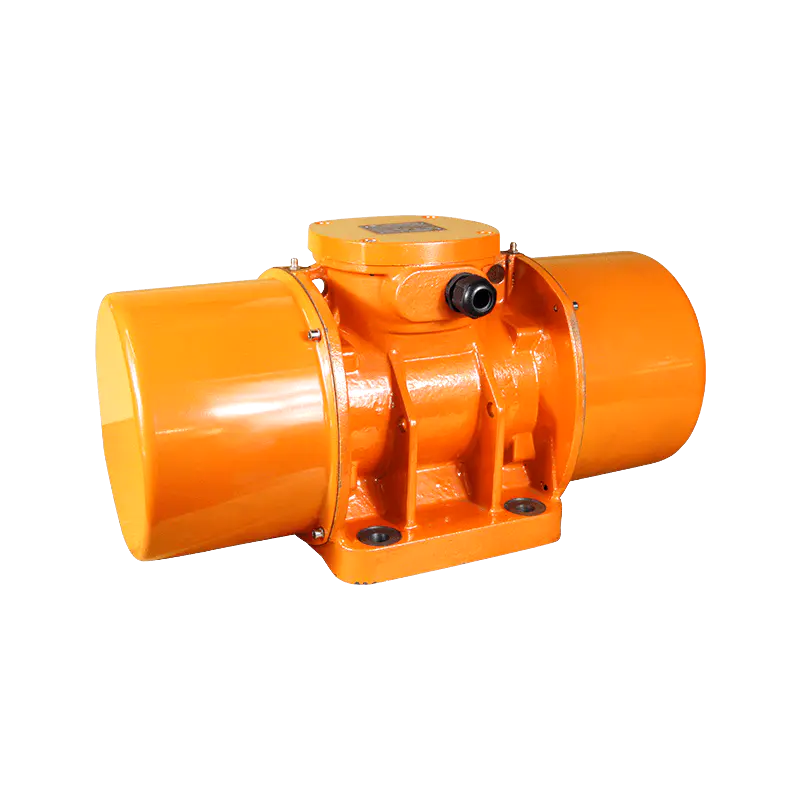
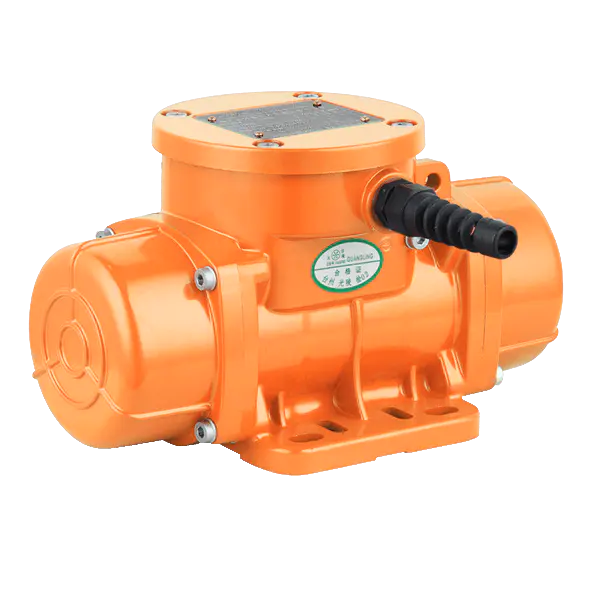
A motor spec sheet listing 3600 RPM next to another listing 1000 RPM might look like a simple speed comparison, but for an industrial vibration motor that number determines the entire character of the vibration a piece of equipment will produce, from a fast, fine shaking motion down to a slower, heavier throw. Pole count sets this base frequency, and getting it matched to the application is a foundational decision in specifying an industrial vibration motor for a screen, feeder, or compaction system.
Pole Count Sets the Base Vibration Frequency
An industrial vibration motor built with a 2-pole winding runs at 3000 or 3600 RPM depending on the local power frequency, producing a fast, high-frequency vibration suited to fine screening or applications needing rapid material movement across a short distance. Moving up to 4, 6, or 8 poles drops the running speed to 1500, 1000, or 750 RPM respectively, trading vibration frequency for a heavier, more forceful throw better suited to compaction, bin discharge, or moving denser bulk material. Zhejiang Guangling Vibrating Technology Co.,Ltd produces its MV standard series across this full pole range specifically so buyers can match motor speed to the physical behavior their application actually needs rather than settling for whatever speed a single available motor happens to run at.
Eccentric Weight Vibration Force Scales Independently of Speed
Eccentric weight vibration force comes from adjustable counterweights mounted on the motor shaft, and changing the weight position or mass changes the amplitude of vibration independently of the motor's running speed. This adjustability means two motors running at the same RPM can still produce meaningfully different vibration intensity depending on how their eccentric weights are set, which is why a motor's speed rating alone doesn't fully describe what force it will actually deliver once installed and adjusted for a specific job. Buyers should treat weight adjustment range as a separate specification from pole count and RPM, since both variables interact to determine the final vibration characteristics a piece of equipment experiences.
Vibration Motor RPM Selection Depends on the Application, Not Just the Material
Vibration motor RPM selection for a screening application generally favors higher speeds that keep material moving quickly across a mesh surface, while a compaction or settling application benefits more from a lower-speed motor delivering a heavier throw per cycle even at reduced frequency. The same bulk material can call for a different motor speed depending on whether the goal is fine separation, rapid conveying, or dense settling, which is why matching RPM to the process outcome matters more than matching it to the material type alone. Zhejiang Guangling Vibrating Technology Co.,Ltd's application experience across mining, chemical refining, and construction machinery reflects this same pattern: similar materials moving through very different motor speed requirements depending on what the process is actually trying to accomplish.
Voltage and Frequency Options Support Multiple Export Markets
An industrial vibration motor built for international distribution needs voltage flexibility beyond a single domestic standard, and options spanning 110V, 220V, and 380V alongside both 50Hz and 60Hz frequency support let the same base motor design serve markets with different grid standards without a full redesign. DC-powered variants at 12V and 24V extend this flexibility into mobile or battery-powered equipment applications where standard AC power isn't available at the installation point. Buyers sourcing for a specific export destination should confirm voltage and frequency compatibility directly against the destination grid rather than assuming a motor rated for one region's standard will perform identically once installed on another.
Certification and Bulk Supply for Equipment Manufacturers
Buyers integrating an industrial vibration motor into original equipment, such as vibrating screens, feeders, or conveyor systems, should confirm production capacity and lead times against their own manufacturing schedule, since a motor shortage partway through an equipment production run creates delays that ripple through an entire assembly line. Zhejiang Guangling Vibrating Technology Co.,Ltd maintains over thirty sets of precision manufacturing equipment supporting this kind of volume production, and buyers placing bulk orders across multiple pole and voltage configurations of an industrial vibration motor line should confirm consistent quality control applies uniformly across the full range rather than only to the highest-volume standard configurations.


 Tel: + 86-576-86320988
 Fax: + 86-576-86333217
 E-mail:
  Add: Dayangcheng Industrial Zone, daxi, wenling, zhejiang, china
